Showing posts with label central banks. Show all posts

Wednesday, March 27, 2013

Bank Leverage, Fractional Reserve Banking and Central Banks - the US vs. Europe


The gold standard put a check on governmental plans for easy money. It was impossible to indulge in credit expansion and yet cling to the gold parity permanently fixed by law. Governments had to choose between the gold standard and their — in the long run disastrous — policy of credit expansion. The gold standard did not collapse. The governments destroyed it. It was incompatible with etatism as was free trade. The various governments went off the gold standard because they were eager to make domestic prices and wages rise above the world market level, and because they wanted to stimulate exports and to hinder imports. Ludwig von Mises

If the situation in Cyprus has accomplished one thing, it has raised the issue of fractional reserve banking.  Moreover, it appears that governments, the Troika and central banksters everywhere have shed the false benevolence of statist theft as they now clearly and resoundingly assert that  YES, they fully intend to steal the deposits of ordinary folks to save and subsidize failed banks and banksters.  The plundering masks have finally come off.

This is truly EPIC.

However, what is confounding and confusing is why European banks are in so much trouble yet US banks are proclaimed healthy, at least by comparison to European banks.  This phenomena has a lot to do with leverage.
Leverage increases when bank assets grow at a faster rate than equity capital, such as common stock, which acts as a cushion against losses.  Allbusiness.com 
In other words, banks don't gamble with their own capital, they use the money of depositors.  Anybody who deposits money in a bank is giving the bank permission to gamble with their money however they want - there are ZERO restrictions on the banks and banks effectively become casinos.  Such is the fatal flaw of fractional reserve banking, here.

Zero Hedge zoomed in on the issue of bank leverage.

Guess Who’s Even More Leveraged Than the European Banks?
The US banking system as a whole is leveraged at 13-to-1. While this is not horrible relative to Europe’s banking system (more on this in a moment), these levels still mean that an 8% drop in asset values wipes out ALL equity.

Then you have Europe’s banking system, which is leveraged at 26-to-1. Anecdotally, this is borderline Lehman Brothers (30 to 1). At these levels, even a 4% drop in asset prices wipes out ALL equity.

Japan’s banks are leveraged at 23 to 1. France’s are 26 to 1. Germany is 32 to 1.

You get the idea.

However, worse than any of these the US Federal Reserve. With $2.8 trillion in assets and only $52 billion in capital, the Fed is leveraged at 53 to 1. Yes, 53 to 1.
The only reason US banks have some semblance of sane leverage ratios is because the Federal Reserve created a ton of "out of thin air fiat money" to recapitalize US banks and they did it by largely buying bad assets that included $1.3 trillion in bad mortgage paper.

Of course the next logical question is:  why didn't the European Troika just do what the Federal Reserve did?  Moreover, printing money out of thin air doesn't solve the myriad of problems associated with the scourges of fractional reserve banking but for some reason the Troika has opted to take a different path than the US.  It's entirely possible that European banks were always way more leveraged than US banks and that printing was a nuclear option that would immediately result in inflation on steroids, Weimar Republic style, here.

While many who try and follow Austrian economics do indeed scratch their heads in bewilderment over the fact that the US has managed to escape the stone cold reality check that is descending upon Europe, one of the most fascinating and enlightening explanations came from the Ludwig von Mises Institute that actually argued in favor of the Euro in that it was a rudimentary form of a disciplined free market currency despite its vast and numerous flaws.

An Austrian Defense of the Euro
The Euro as a "Proxy" for the Gold Standard (or Why Champions of Free Enterprise and the Free Market Should Support the Euro While the Only Alternative Is a Return to Monetary Nationalism)....

The introduction of the euro in 1999 and its culmination beginning in 2002 meant the disappearance of monetary nationalism and flexible exchange rates in most of continental Europe. Later we will consider the errors committed by the European Central Bank (ECB). Now what interests us is to note that the different member states of the monetary union completely relinquished and lost their monetary autonomy, that is, the possibility of manipulating their local currency by placing it at the service of the political needs of the moment. In this sense, at least with respect to the countries in the eurozone, the euro began to act and continues to act very much like the gold standard did in its day. Thus, we must view the euro as a clear, true, even if imperfect, step toward the gold standard.

Moreover, the arrival of the Great Recession of 2008 has even further revealed to everyone the disciplinary nature of the euro: for the first time, the countries of the monetary union have had to face a deep economic recession without monetary-policy autonomy. Up until the adoption of the euro, when a crisis hit, governments and central banks invariably acted in the same way: they injected all the necessary liquidity, allowed the local currency to float downward and depreciated it, and indefinitely postponed the painful structural reforms that where needed and that involve economic liberalization, deregulation, increased flexibility in prices and markets (especially the labor market), a reduction in public spending, and the withdrawal and dismantling of union power and the welfare state. With the euro, despite all the errors, weaknesses, and concessions we will discuss later, this type of irresponsible behavior and forward escape has no longer been possible.
It it possible that Europe and the Euro are well ahead of America in addressing its monetary problems? It's hardly likely that the EU anticipated or welcomed the situation of collapsing banks and it's doubtful that the EU bureaucrats have any goal except to hold the economic, political and monetary union together, whatever the cost.

Meanwhile, the Federal Reserve continues to purr along oblivious to its own fatal flaws as the political class in the District of Crime (DC) grows even more arrogant and smug, as if America is somehow exempt from the problems that plague the rest of the world and the mountain of debt created by fiat monetary systems.

When reality finally strikes America, it will be far more painful and devastating than anything the profoundly suffering southern Europeans are experiencing.

Saturday, September 8, 2012

The British Empire aka the American Empire Needs to Finally Die


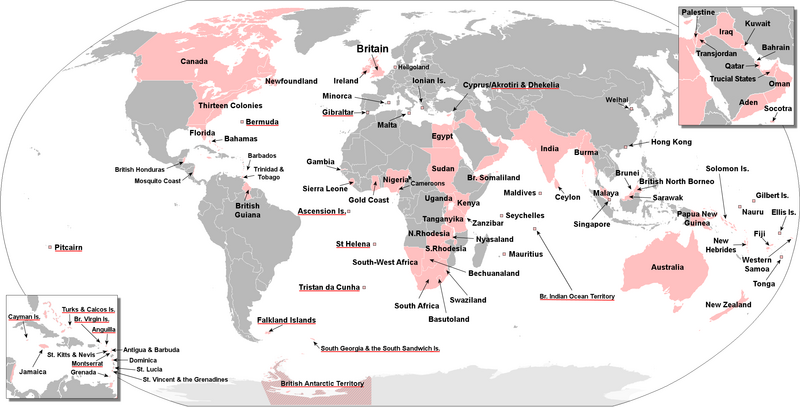
It's been said many times that the US is really nothing more than the resurrected British Empire that lost its power and prestige post WW II when the US fanatically embraced British style militarism and empire that catapulted America to the status of the world's sole superpower because of its superior military might. Never before in human history had a sole superpower dominated for so long and without challenge. The US-British alliance has frequently been dubbed the Anglo-sphere. The British Empire at its peak:


Most of those British colonies and possessions are now gone and even Canada and Australia are sovereign nations with little attachment to the British crown.

Throughout human history, the fight for human liberty has been a revolt against government, the state, empires and their formidable military machines. The British Empire grew because its formidable navy ruled the seas for hundreds of years.

America and Britain have a lot in common, starting with the fact that America was largely settled and populated by English speaking peoples who adopted English law and culture. The English bequeathed to us some extraordinary gifts such as its system of secure property rights and a civil and criminal legal justice system (English common law). The Magna Carta is deemed one of the great treasures of western civilization because the 1215 document directly challenged absolute rule by a monarch.

However, America also adopted some of the worst features of the British, namely its perennial addiction to empire, resource exploitation and the perceived right to plunder and murder people to secure resources. Furthermore, the British were never capitalists in the true sense of the word. They were merchantilists.

Mercantilism in England

Celebrating America's Capitalist Revolution

The British system of mercantilism is not capitalism and in fact is more closely aligned with fascism, oligarchy, plutocracy, cronyism, corporatism etc., or in more simple terms the rule of the elites for their exclusive benefit, benefits that typically include monopoly powers and buying legislative bodies to guarantee protectionism from competition.

In many ways, the American Revolution was also a revolt against the British system of mercantilism but only to a degree because America during the Revolutionary period was also swimming with British loyalists and while many of these loyalists joined the Revolution, they remained addicted to the British system of mercantilism, empire, its central bank and even its system of monarchy.  Notable among American mercantilists was Alexander Hamilton.  Hamilton forever denied that he was a monarchist, although he was constantly defending himself against the charge.

A Hamilton biographer, Richard Brookheiser, wrote in a biography titled Alexander Hamilton, American:
He put up with Republican government because he had to, while laboring to transform it, or even subvert it. At heart he was an aristocrat and a plutocrat, who favored rule by an elite of the rich.
The differences between Jefferson and Hamilton couldn't be more clear. As excerpted from The Creature from Jekyll Island by G. Edward Griffin:

JEFFERSON: “A private central bank issuing public currency is a greater menace to the liberties of the people than a standing army.” “We must not let our rulers load us with perpetual debt.”

HAMILTON: “No society could succeed which did not unite the interest and credit of rich individuals with those of the state.” “A national debt, if it is not excessive, will be to us a national blessing.”

Hamilton only cared about advancing the interests of the rich and the state at the expense of the individual and those further down the ladder of power and money, especially the poor and middle class whose interests were deemed expendable and irrelevant. Conversely, Jefferson vehemently opposed any bank or class of people holding power over anybody.  Hamilton's view of power was that it must be concentrated while Jefferson's view of power was that it must be diffused as far and wide as possible and to the point where political power just lacks the power to oppress.

At the end of the day it was Hamilton who won, and of course, the liberty of the American people was destined for eventual destruction.

The worst and most destructive features of Britain that America embraced were its systems of central banking and economic mercantilism because both ruthlessly combined to advance empire through debt and fascist corporatism through trade. It's a deadly combination that has wrecked havoc upon humanity and its peoples.

It took Hamilton a long time to achieve his dream, a dream that only his ghost can now gloat over. Efforts to fight off the central bank were waged ferociously, especially by Andrew Jackson, but tragically in 1913 the bankster purveyors of paper fiat money finally won, and not surprisingly, with the support of  liberal progressive Democratic President Woodrow Wilson who also gave us the income tax or 16th amendment . America has been at war practically non-stop since we got the Federal Reserve and the purchasing power of the dollars has dropped by at least 95% because, above all, a central bank is nothing more than a vehicle to transfer wealth from the poor and middle class to the rich.


The rich never suffer a loss of wealth from central banking operations, largely because mechanisms are in place to protect powerful insider financial interests from the loss of wealth by directly subsidizing any losses.  But the most ugly legacy of the Federal Reserve and the central banksters in general is that they successfully spread their poisonous central banks and mercantilism throughout the world.

While the Federal Reserve has now replaced the Bank of England as the world's most powerful central bank, its also true that Britain, its mercantilism, its empire and its fiat banking system have all survived across the the pond where these anti-liberty institutions have grown even more powerful, dangerous and deadly.

Bankster power has been absolute for quite a long time and includes the draconian powers of government to squash human liberty at every turn while waging perpetual warfare for resources to plunder. But the banksters have an Achilles' heel that was exposed in all its naked glory in the 2008 financial meltdown. While central banks scrambled to to keep the world's central banks from totally imploding, it's also quite likely that the banksters are finally on angels wings. Printing insane amounts of fiat money to bailout the rich at the expense of the poor and middle class has left the global economy tettering on the brink of collapse and $16 trillion is a most threatening pile of debt fueled fiat money.

Have You Heard About The 16 Trillion Dollar Bailout The Federal Reserve Handed To The Too Big To Fail Banks

While the dollar only survives because of its lofty and prestigious status as the world's reserve currency, it's not necessarily a guarantee or even a foregone conclusion that the dollar will remain the reserve currency of the world. The dollar isn't the world's reserve currency because it's such a great currency but because all other currencies are either much worse and/or even more unstable for purposes of international trade.

There are signs that the dollar will ultimately be challenged and such challenges will come from nations that are stockpiling gold for future use in creating gold backed currencies.

Putin is Stockpiling Gold
According to the World Gold Council, Russia has more than doubled its gold reserves in the past five years. Putin has taken advantage of the financial crisis to build the world’s fifth-biggest gold pile in a handful of years, and is buying about half a billion dollars’ worth every month.
The Hoarding Continues: China Purchases A Record 100 Tons Of Gold In April From Hong Kong
Gold imports by mainland China from Hong Kong climbed 65 percent to a record in April, advancing for a third straight month as investors sought a hedge against financial-market turmoil and an economic slowdown....

"We can’t rule out the possibility that the central bank is buying gold,” said Wang at Agricultural Bank of China, referring to the People’s Bank of China.

Rule out? You can bet on it.
The probability that gold backed currencies will rise to challenge the supremacy of the paper tiger US dollar keeps growing and now appears to be a certainty even if the timing of such events is unclear.

The bad news is that the American people will suffer greatly as the once mighty United States of America joins the heap of being nothing more than just another failed and bankrupt banana boat republic. Few Americans even understand that our $16 trillion debt mountain that sustains our fictitious standard of living is the leverage that America uses to force other nations to buy Treasuries. Effectively, America went to nations like China and said in so many words "buy our debt and we'll buy your goods. We don't even care if American domestic manufacturing ceases and desists because we only care about the continuity of the Empire, whatever the price".  This is so Hamiltonian and so anti-Jefferson.   The price was more than the cost of interest, America sacrificed its legendary domestic manufacturing, the lifeblood of any prosperous society, for the glory of an Empire of Debt that was identical the British model of empire.

The silver lining is that while there will be profound hardships for the American people as they struggle to survive amid the bankster induced carnage, hope lies in the fact that we can once again have the opportunity to rebuilt the free and prosperous nation that we once had but willingly voted to sacrifice on the alter of empire and debt.

When the British Empire finally dies, along with its model of central banking, mercantilism and empire, the world will finally have a chance at real hope, real change and a future of peace, liberty and prosperity.

In the high risk, high stakes game of geo-politics, nothing is ever static although it moves very slowly. Still, there is ample evidence surfacing that the major shift in power is underway, from the Anglo-sphere to the rise of new economic paradigms in other nations who are embracing sound money and economic liberty.

Meanwhile, I can only opine that Americans abandoned their prosperous Republic, unlike the the Swiss who kept their republic, steered clear of wars and foreign intrigues, and still remain one of the most peaceful and prosperous folks on the planet and in human history.

Americans? We had it all and blew it.

Monday, July 23, 2012

What Happens When Governments No Longer Have Money to Pay Entitlements and Pensions?


Greece is broke. Spain is broke. Portugal is broke. Italy is nearly broke. Bailout requests continue to mount. Many nations simply borrowed heavily to sustain an unsustainable socialist cradle to the grave paradise. Folks are protesting in the streets in big numbers. They are protesting cuts in entitlements. They are protesting cuts in public sector pensions.  They are protesting cuts in healthcare benefits.  They are protesting the lack of jobs.

Demand for Spanish Bonds Collapses; "No Money Left to Pay Services" says Treasury Minister; Massive Protests Over Austerity; Two-Year Yield soars 60 Basis Points

But they can protest all they want. At the end of the day, broke is still broke, bankrupt is still bankrupt and there literally is no money to pay promised benefits. As the debt mounts, more and more revenues are siphoned off just to service the gargantuan debt which in turn decreases the amount of money left over for entitlements.

In France, Francois Holland won an election by promising to tax the rich at a rate of 75%, a campaign promised that he kept.  It's widely believed that such a draconian measure will drive the wealthy out of France and to much friendlier tax abodes.  The panicked Spainards are considering similar measures.

Prepare for Spanish Implosion: Businesses Threaten to Leave Spain Over Tax Hikes; Finance Minister Proposes 56% Tax on Short-Term Financial Transactions

Americans tend to ignore what is happening across the pond because they really don't believe that what is happening in Europe and elsewhere could ever happen in America.  Of  course, Americans are living in a fantasy land but that won't last long and when reality finally hits America it will pack a wallop of a bite.

There are credible signs in America that our delusions will be short lived.  The US is sitting on unfunded liabilities (pensions, SS, Medicare, Medicaid and other entitlements) of over $100 trillion.  This didn't come from Alex Jones.  It came from the Dallas Federal Reserve!
According to our calculations at the Dallas Fed, that unfunded debt of Social Security and Medicare combined has now reached $104 trillion—trillion with a 'T'—in discounted present value. – Richard Fisher, February 10, 2010
There is also the issue of massively underfunded public sector pensions and retirement benefits at the state and municipal level.

Public Sector Pensions Underfunded by $4.6 Trillion - That's a Future Tax Folks

Here's what is really going to happen.  Sooner rather than later, nations and people will simply be forced to start living off what they actually produce and save instead of the debt fueled consumerist economy driven by fiat banksters.

Will it be painful?  Absolutely.  But the alternative of continuing to live the monetary lie will be far more painful as central banks just continue to inflate currencies to the point where folks will need a truckload of greenback just to buy a loaf of bread.

Governments steal from the people by devaluing currencies with inflation.  And yes, citizens are complicit in the schemes so long as they perceive a value for themselves (raking in their share of the plunder).

America has one huge advantage.  The dollar still maintains its lofty status as the world's reserve currency and it's also a petro-currency.  If oil ever starts trading in non-dollar currencies, the dollar is toast and America officially becomes just another failed banana boat republic.  Moreover, there is the issue of our mountain of unsustainable debt and the continued willingness of foreign nations to subsidize our outsized debt fueled fictitious lifestyles.  Many astute financial pundits believe and have documented the fact the foreign nations are quietly and not so quietly shedding Treasuries because they are very concerned about ever getting paid. The simple truth is that America is a Debt Man Walking.   Who is the largest purchaser of Treasuries?  The Federal Reserve!
The Federal Reserve has been the largest buyer of U.S debt in the last three years...here.
Economist Peter Schiff has been saying for years that America needs to get back to producing things, learning to save and living within our means.  He's right.  It's precisely how America became the wealthiest and greatest free nation to ever grace the planet.   America once had the most prosperous middle class in all of human history.

We simply blew it by allowing government, banksters, militarists and corporatists to concentrate wealth and power into the hands of a few.  The consequences have been devastating.

Pundits like using the term SHTF (shit its the fan).  When the SHTF what will really happen?  Commodities will become the new temporary currency, especially food, fuel and medicines.  Alternative paradigms of survival will emerge, notably in underground economies that will grow as government becomes powerless.  There are communities in Greece where they barter and use local currency (not the Euro).   Raw and absolute survival instincts will kick in and trump loyalty to the state.

Some folks have put forth the premise that America's failed system of governance and its fascist, crony capitalist economic system must fail if the people are ever going to have the opportunity to rise in liberty and restore their prosperity.  It's a valid premise.

100 years of Keynesian statist economic central planning has effectively obliterated all that once propelled western nations to liberty and prosperity.  The system can't be tweaked or even saved. All that's left is starting over and starting over can only work with sound money and minimal government power.

Saturday, July 21, 2012

Most Americans are Clueless About How Bad Things Really Are Economically and Fiscally in America


Few Americans are even aware of what is happening in Greece, Spain, Portugal, Italy and other European nations that are suffering profound economic misery. Americans mostly ignore what is happening around the world and assure themselves that what happens elsewhere could never happen in America. However, the economic situation is quite grim in America and elsewhere.

Among those who do comprehend the gravity of the situation, the alarm bells keep getting louder and louder as America keeps barreling toward the black hole of economic collapse at a breakneck speed. An interview with David Stockman has gone viral among those who follow economic data. Stockman headed the Office of Management and Budget (OMB) during the Reagan years and also resigned over Reagan era Republican spending. Economist Gary North had this to say about Stockman's prescient warning. here.
You had better read this article. I mean the whole article, not just my highlights.

David Stockman gave an interview. He was the head of the Office of Management and Budget early in Reagan’s term. He quit. He saw what Reagan’s deficits would do.

In 1977, when the federal deficit reached $54 billion, I predicted a $200 billion federal deficit in 1984. I was too optimistic. It hit $208 billion in 1983. Then it got worse....

You had better take the following seriously.

I take it very seriously.
Stockman is a well known hero among fiscal conservatives. His interview by Alex Daley of Casey Research is titled Austerity Is Not Discretionary.  Here it is:

Interviewed by Alex Daley, Chief Technology Investment Strategist, Casey Research Alex Daley: Hello. I'm Alex Daley. Welcome to another edition of Conversations with Casey. Today our guest is former Reagan Budget Director and Congressman David Stockman. Welcome to the show, David.

David Stockman: Glad to be here.

Alex: So we're here in Florida talking at the Recovery Reality Check Casey Summit. What do you think: is the United States economy on the road to recovery?

David: I don't think we are at the beginning of the recovery. I think we are at the end of a disastrous debt supercycle that has gone on for the last thirty or forty years, really. It started when Nixon defaulted on our obligations under Bretton Woods and closed the gold window. Incrementally, year after year since then, we have been going in a direction of extremely unsound money, of massive borrowing in both the private and the public sector. We now have an economy that is saturated with debt: $54 trillion or $53 trillion – 3.5 times the GDP – way off the charts from where it was for a hundred years prior to the beginning of this. The idea that somehow all of that debt is irrelevant, as the Keynesians would tell us, is fundamentally wrong – and the reason why the economy can't get up off the mat.

We're doing all the wrong things. We're adding to the problem, not subtracting. We are not allowing the debt to be worked down and liquidated. We're not asking people to save more and consume less, which is what we really need to do. And so therefore I think policy is just making it worse, and any day now we will have another recurrence of the kind of economic crisis we had a few years ago.

Alex: You paint a very stark picture, but if people just stop spending, start saving, won't companies like Apple see their earnings hurt? Won't the stock market then start to tumble, people's net worth fall? Isn't that a negative cycle that feeds on itself?

David: Sure it does, but you can't live beyond your means because it's pleasant. It's not sustainable. Clearly the level of debt that we have is not sustainable. We have a whole generation – the Baby Boom – that's about ready to retire, and they have no retirement savings. We have a federal government that is bankrupt, literally. Its [debt is] $16 trillion and growing by a trillion a year. Something's going to give. We can't pay for all these entitlements. There won't be the revenue generation in the economy to do it.

So as a result of that, we are deluding ourselves if we think we can just continue to spend. Look at the GDP that came out in the first quarter of this year. It was only 2.2%. Most of it was personal consumption expenditure, and half of that was due to a drawdown of the savings rate, not because the economy was earning more income or generating more real output. It was because of a drawdown of savings. That is exactly the wrong way to go – an indication of how severe the crisis is going to be. I'm not saying the economy should stop spending entirely. I'm only saying you can't save 3% of GDP and spend 97% if you are going to get out of this fix. As the savings rate goes up both in the public sector (which means reduction of spending and the deficit) and the household sector (to seriously reduce debt burden, which has not really happened) we are going to, on the margin, spend less, save more. It will slow down the economy. It will undermine profits, I agree. But profits today are way overstated. They're based on a debt-bloated economy that isn't sustainable.

Alex: So we can only live beyond our means for so long, as any family knows.

David: Yes.

Alex: Now, the government can reduce its expenses at any time by simply reducing spending, and it can reduce debt if it brings in more tax revenue. That's austerity – I think that's how they refer to it. But won't austerity cause massive joblessness? Won't there be millions more people in this country not receiving a paycheck?

David: Yes, but the critique, the clamoring and clattering that you hear from the Keynesians (or even mainstream media, which is pretty clueless economically) that austerity is bad forgets the fact that austerity isn't an elective course. Austerity is something that happens to you when you're broke. And yes, it is painful and spending will go down and unemployment will go up and incomes will be impaired, but that is a consequence of the excess debt creation that we've had for the last thirty years. So austerity is what happens when you break the rules.

And somehow we have this debate going on. They're making a mistake. They chose the wrong strategy. Do you think Greece chose the wrong strategy with austerity? No. No one would lend them money. That's why they ended up in the place they were. Do you think that Spain today is teetering on the brink because they said, "Oh, wouldn't it be a good idea to have austerity?" No, they had a gun to their head. They were forced to do this because the markets would not continue to lend, and even now their interest rate is again rising. The markets are losing confidence, and unless the ECB prints some more money and bails them out some more, they are going to have austerity. So the austerity upon us is the backside of the debt supercycle we had for the past thirty years. It's not discretionary.

Alex: Austerity hasn't been forced upon us yet. The dollar is up, people are continuing to buy Treasuries – both nations and banks are buying Treasuries. To all extents and purposes, people are continuing to show massive confidence in the US government, lend it money at extremely cheap interest rates, and letting it build up its debt.

So you are advocating that, unlike Greece or Spain taking it to the edge and having austerity forced on them, we should volunteer for austerity today? Instead of just kicking the can down the road and living high a little bit longer, until the bill collectors finally come knocking? Why go today, why start austerity now instead of doing what Greece did and going as long as you possibly can?

David: Because Greece is a $300 billion economy. Tiny. A rounding error in the great scheme of things. It's – last time I checked – about eight and a half months' worth of Walmart sales. Okay? That's a little different than when you have the $15 trillion heartland of the world economy, and the $11 trillion Treasury market which is at the center of the whole global financial system buckle and falter. That's the risk you're taking if you say, "Mañana. Kick the can; let's just wait for something good to happen."

This market isn't real. The two percent on the ten-year, the ninety basis points on the five-year, thirty basis points on a one-year – those are medicated, pegged rates created by the Fed and which fast-money traders trade against as long as they are confident the Fed can keep the whole market rigged. Nobody in their right mind wants to own the ten-year bond at a two percent interest rate. But they're doing it because they can borrow overnight money for free, ten basis points, put it on repo, collect 190 basis points a spread, and laugh all the way to the bank. And they will keep laughing all the way to the bank on Wall Street until they lose confidence in the Fed's ability to keep the yield curve pegged where it is today. If the bond ever starts falling in price, they unwind the carry trade. They unwind the repo, because then you can't collect 190 basis points. Then you get a message, "Do not pass go." Sell your bonds, unwind your overnight debt, your repo positions. And the system then begins to contract – exactly what happened in September and October of 2008. Only, that time it was an unwind to the repo on mortgage-backed securities and CDOs and so forth. That was a minor trial run for the great unwind that is going to happen when the Treasury market is finally shattered with a lack of confidence because, on the margin, no one owns a Treasury bond: they just rent it on borrowed money. If the price starts falling, they'll get out of that trade as fast as they got out of toxic CDOs.

Alex: So when people run away from the US, they will run away all at once.

David: Well, if they run away from the Treasury, it sends compounding forces of contagion through the entire financial system. It hits next the MBS and the mortgage market. The mortgage market then scares the hell out of people about the housing recovery, which hasn't happened anyway. And if there isn't a housing recovery, middle-class Main-Street confidence isn't going to recover, because it is the only asset they have, and for 25 million households it's under water or close to under water.

Alex: We saw something much like that in 2008. All the markets correlated. Stocks went down. Bonds went down. Gold went down with them. It sounds like what you're saying is that the Fed is effectively paying bankers to stay confident in the Fed, and that the moment that stops – either because the Fed stops paying them or something else shakes their confidence – this all goes down in one big house of cards?

David: Yes, I think that's right.  The Fed has destroyed the money market. It has destroyed the capital markets. They have  something that you can see on the screen called an "interest rate." That isn't a market price of money or a market price of five-year debt capital. That is an administered price that the Fed has set and that every trader watches by the minute to make sure that he's still in a positive spread. And you can't have capitalism if the capital markets are dead, if the capital markets are simply a branch office – branch casino – of the central bank. That's essentially what we have today.

Alex: Last night you told our audience that if you were elected president, the first thing you would do is quit. Or at least demand a recount, I believe were your words, which I thought was telling. Are you saying there are no policy changes we could make today that would get us out of this? Or at least that wouldn't get you assassinated?

David: Yeah, there is a paper blueprint. People who believe in sound money and fiscal responsibility, that you create wealth the old-fashioned way through savings and work and effort and not simply by printing money and trading pieces of paper – there is a plan that they could put together. One would be to put the Fed out of business. You don't have to "end the Fed," although I like Ron Paul's phrase. You have to get them out of discretionary, active, day-to-day meddling in the money markets. Abolish the Open Market Committee.

The Fed has taken its balance sheet to $3 trillion. That's enough for the next 50 years. They don't have to do a damn thing except maybe have a discount window that floats above the market, and if things get tight, let the interest rate go up. People who have been speculating will be carried out on a stretcher. That's how they used to do it. It worked prior to 1914. That's the first step: abolish the Open Market Committee. Abolish discretionary monetary policy. Let the Fed, if you're going to keep it – I don't even know that you need to do that, but if you are going to keep it – be only a standby source. As Badgett said (Walter Badgett, the great 19th-century British financial thinker): provide liquidity at a penalty rate to sound collateral.

Now, that's what J.P. Morgan did in 1907, in the great crisis of 1907, from his library. He didn't have a printing press. He didn't bail out everybody. He didn't do what Bernanke did and say: "Stop the presses, freeze everybody, and prop up Morgan Stanley and Goldman Sachs and all the rest of the speculators." The interest rate, the call-money interest rate, which was the open-market interest rate at the time, some days went to 30, 40, 70% – and they were carrying out the speculators left and right, liquidating margin debt, taking out the real estate speculators. Eight or ten railroads went bankrupt within a couple of months. The copper magnates got carried out on their shields.

This is the only way a capital market can work, but it needs an honest interest rate. And we have no interest rate, so therefore we solve nothing and we have the kind of impaired, incapacitated markets that we have today. They're very dangerous, because they're all dependent on twelve people. It is what I call "the monetary Politburo of the Western world," and they are just as dangerous as the Politburo in Beijing or the Politburo of memory in Moscow.

Alex: A twelve-person Open Market Committee determining the future of our economy by manipulating rates. Sounds like central planning to me.

David: It is. They are monetary central planners who are attempting to use the crude instrument of interest-rate pegging and yield-curve manipulation and essentially buying debt that no one else would buy, in order to keep this whole system afloat. It's Ponzi economics. Anybody who had financial training before 1970 would instantly recognize this as Ponzi economics. It is only because of the last twenty years we got so inured to prosperity out of the end of a printing press and massive incremental debt that people lost sight of the fundamental principles of sound money, which, there's nothing arcane about it. It's just common sense. It is not common sense to think that 50, 60, 70% of all the debt that's being created by the federal government can be bought by the Federal Reserve, stuffed in a vault, and everybody can live happily ever after.

Alex: So the government has certainly put us in a precarious position, but I don't think they alone have put America in this position, have they? You mentioned consumer debt becoming a major burden on the economy. How do we shed ourselves of that? I mean, the federal government can repudiate its debts if we walk away from it. We might see a few wars or something from that. It could inflate its way out of it. It can tax its way out of it. But how do households get out from under the debt burden that they have today?

David: Well, it's very tough, and they were lured into it by bad monetary policy when Greenspan panicked in December 2000. The interest rate was 6.5%; we had an economy that was threatened by competitors around the world. We needed high interest rates, not low. He panicked after the dot-com crash, and as you remember in two years they took the interest rate all the way down to 1%, and they catalyzed an explosion of mortgage borrowing, which was crazy.

When they cut the final rate down to 1% in May, June 2003, in that quarter – the second quarter of 2003 – the run rate of mortgage borrowing was $5 trillion at an annual rate. That was nuts! There had never been even a trillion-dollar annual rate of mortgage borrowing previously. In that quarter the run rate was $5 trillion, 40% of GDP. Why? Because the Fed took the rate down to 1%. Floating-rate product got invented everywhere. Anybody that had a pulse was being given mortgage loans by the brokers. The mortgage brokers didn't have any capital or funding. They went to Wall Street. They got warehouse lines, and the whole thing got out of control. Millions of households were lured into taking on debt that was insane, and now we have a generation of debt slaves.

There are 25 million households in America who couldn't move if they wanted to, because their mortgages are under water. They cannot generate a down payment and the 5% or 6% broker fee that you need to move. So we've got 25 million households immobilized, paralyzed, and worried every day about when they are going to lose property, because of what the Fed did. It's a terrible indictment.

Alex: Mobility itself is the American dream, isn't it? It's the ability to pick up and find work and then move and do all that. So now we have people who are slaves to their debt. How do we get ourselves out of this? Is this just a matter of personal financial discipline? Is there a policy move that can happen?

David: It's policy. If we don't do something about the Fed, if we don't drive the Bernankes and the Dudleys and the Yellens and the rest of these lunatic money-printers out of the Federal Reserve and get it under the control of people who have at least a modicum of sanity, we are just going to bury everybody deeper.

It's unfortunate. The American people are as much a victim of the Fed's massive errors as anything else. People were not prudent when they took on debt at 100% of the peak value of their property at some moment in 2004 and 2005. They were lured into it. But now we're stuck with something that didn't need to happen.

Alex: The Federal Reserve was founded in 1914, and it saw America through World War I, World War II. It saw America through Vietnam, saw America through the biggest boom in the economic history of the world. Yet now, today, you are calling for the abolishment of the Fed. Wasn't the Fed here the entire time that America was a prosperous, growing, wealthy, technology-driven nation? What's changed?

David: The greatest period of growth in American history was 1870-1914 – the Fed didn't exist. Right after 1870, when we recovered from the Civil War we went back on the gold standard. It worked pretty well. World War I was a catastrophe for the financial system. The Fed financed it, but I don't give them any credit for that, okay? We shouldn't have been in that war. It was a stupid thing to get involved in. But once we got involved in it, the Fed printed money like crazy, it facilitated borrowing, set the groundwork for the boom of the 1920s and the collapse of the 1930s.

Even then though, we had great minds who coped with reality in a pragmatic way in the Fed. Even Marriner Eccles wasn't all that bad. He stood up to Truman in 1951, when Truman wanted to force the Fed to continue to peg interest rates at 2% or 2.5% when inflation was 5%. Then we had William McChesney Martin: brilliant, pragmatic. He wasn't some kind of gold-standard guy in a pure sense, but a pragmatic guy who understood that prosperity had to come out of private productivity, out of investment, out of risk-taking, and the Fed had to be very careful not to allow speculation to start or inflation to get ignited. In 1958, he invented the phrase, "The job of the Fed is to take the punchbowl away." And we had a small recession. Six months after the recession was over he was actually raising the margin rate on the stock-market loans in order to quell speculation, and raising interest rates so that the economy didn't start to inflate again.

Now that was the regime we had until, unfortunately, Lyndon Johnson came along with his "guns and butter," took William McChesney Martin down to the ranch, and beat the hell out of him and forced him to capitulate. But here's the point I would make: In 1960, at the peak of what I call the golden era – the twilight of fiscal and financial discipline – we had $30 billion on the balance sheet of the Fed. It had taken 45 years to build that up. Then, as they began to rapidly expand the balance sheet of the Fed during the inflation of the '70s and the '80s, even then it took us until September 2008 – the Lehman collapse – to get to $900 billion. Had the balance sheet only grown at 3%, which is what the capacity of the economy to grow, I think, really is, it would have been $300 billion, so they were overshooting.

Alex: We're three times where we should be.

David: Where we should have been by the Lehman crisis event. In the next seven weeks, this crazy lunatic who's running the Fed increased the balance sheet of the Fed by $900 billion, in seven weeks. In other words, they expanded the balance sheet of the Fed as rapidly in seven weeks as it had occurred during the first 93 years of its existence. And that's not all, as they say on late night TV: in the next six weeks they added another $900 billion. So in thirteen weeks they tripled the balance sheet of the Fed.

Alex: Wow, that's an incredible…

David: So no wonder we are in totally uncharted waters, and it's being run by people who are clueless as to how to get out of the corner they've painted this country into. They really ought to be run out of town on a rail.

Alex: I think you'd find that a lot of our viewers would agree with you on that one. You know, the average American is suffering. It looks like the average American is going to have to suffer more to get us out of this, but it seems like the only thing the Fed is interested in these days is propping up the stock market. Why is that? Where does that come from?

David: The Fed has taken itself hostage with this whole misbegotten doctrine of wealth effects, which was created by Greenspan. In other words, if we get the stock market going up and we get the stock averages going up, people feel wealthier, they will spend more. If they spend more, there is more production and income and you get a virtuous circle. Well, that says you can create wealth through speculation. That can't be true, because if it is true, we should have had a totally different kind of system than we've had historically.

So they got into that game, and then the crisis came in September, 2008. They panicked and pulled out the stops everywhere. As I said, tripled the balance sheet in thirteen weeks, [compared to what] they had done in 93 years. They are now at a point where they don't dare begin to reduce the balance sheet, begin to contract, or they'll cause Wall Street to go into a hissy fit. They are afraid to death of Wall Street going into a hissy fit, so essentially, the robots and the boys and girls and the fast-money traders on Wall Street run the Fed indirectly.

Alex: So, in the 1960s, the Fed is taking away the punchbowl. Sounds like in 2010 the Fed is the one adding the alcohol. They are afraid to stop, lest everybody riot.

David: Yes, they got the party going, and they're afraid to stop it. As a result of that you have a doomsday machine.

Alex: At some point we are going to be forced to stop. Market forces will kick in and Europe and China and India will stop lending us money.

David: Yes. As I say, when the crisis comes in the Treasury market, it will be the great margin call in the sky. They'll start unwinding all of the carry trades, all of the repo. Asset prices generally will be affected, because this will ricochet and compound through the system.

Alex: When does this happen?

David: People looked at the housing market and the mortgage market way back in 2003 – there were some smart people looking at this. They looked at the run rate of gross mortgage issuance, the $5 trillion I was talking about, and said: "This is insane, this is off the charts, this is so far beyond anything that has ever happened before, something bad is going to come of this." It's obvious, if you pour debt into markets… I mean a lot of people leveraged 98%, or whatever they were doing at the time with so-called mortgage insurance, and just high loan to value ratios. They were driving up prices, and so there was a housing-price boom going on. It was sucking the whole middle class into speculation. So that's the nature of the system, and now they don't know how to unwind it.

Alex: That's a pretty stark picture. So as an individual investor, what are we to do? How do we protect ourselves in this type of situation? Should I be owning bonds and staying out of stocks? Should I be owning stocks?

David: No, I would stay out of any security markets. These are unsafe markets at any speed. It's all tied together. As I was saying when the great margin call comes and they start selling the Treasury bond, they'll take everything else with it. Real estate is priced off Treasuries. Mortgaged-backed securities are priced off Treasuries. Corporates are priced off Treasuries. Junk bonds are priced off Treasuries. Everything. The stock market will go into a panic. We don't know when the timing will come – we've never been in a world where there is $15 trillion worth of central-bank balance sheets, like we have today. The only thing I think you can conclude is preservation is the only thing you are about as an investor. Forget about yield. Forget about return. Just keep yourself liquid and preserve your capital, because you can't predict the day when, as I say, the great margin call in the sky comes down.

Alex: So if it's not about coming out ahead, it's about coming out not behind everybody else. It's just losing a little less. What's the most effective way to do that? Do you want to hold cash? Alternative options?

David: Yes. I don't even think there's nothing wrong with owning Treasury bills. I mean, if you want to get, for a one-year Treasury, what is the thing now? Twenty basis points or something?

Alex: So when the great Treasury crash comes, I should own Treasury bills?

David: Well, it doesn't mean the price of the Treasury is going to crash, no.

Alex: Okay, so we are just going to see interest rates skyrocket on new issues. The US government is not going to be able to borrow.

David: That's why you're short. If you're in a thirty-day piece of paper, you're not going to lose principal.

Alex: What happens to the dollar in all of this? If I'm holding dollar denominated assets –?

David: Well, the dollar, in theory, people would think is going to crash. I don't think it is because all the rest of the currencies in the world are worse.

Alex: So once again, America is not that bad off.

David: Well, we're bad off because when the financial markets reprice drastically, it's going to have a shocking effect on economic activity. It's going to paralyze things. It's going to finally cause consumption to come down. It's going to cause government spending to be retracted.

You know, the Keynesians are right. Borrowing does add to GDP accounts. But it doesn't add to wealth. It doesn't add to real productivity, but it does add to GDP as it's calculated and published – because GDP accounts were designed by Keynesians who don't believe in a balance sheet. So they said, "If the public sector and the household sector are borrowing, let's say, $10 trillion next year, run it though GDP, you'll get a big bump to GDP." But sooner or later your balance sheet will collapse. They forgot about that one. So my point is that we've gone through a thirty-year expansion of the balance sheet, an artificial growth in GDP; now we're going to have to be retracting the collective balance sheets. That means that GDP will not grow. It may even contract, and no one's prepared for that.

Alex: So the economy will collapse. The dollar will be okay, because we still need a medium of exchange and the dollar is the least-bad currency in the world. How does gold fit into the picture? Do you think that gold is a good asset? 

David: Yes, I think that gold is a good asset. It's the only currency that anybody is going to believe in after a while.

Alex: Okay, so maybe hold that as an insurance policy. Do you own gold yourself?

David: Yes, as an insurance policy.

Alex: Where else do you invest in today?

David: I'm preserving capital. I'm in cash. I don't think the risk of the system is worth it.

Alex: So you are practicing what you preach, 100%?

David: Yes.

Alex: That's great. It's good to hear. This is excellent advice for our subscribers as well, to consider that there's a lot of potential energy built up in the system. You've articulated it well, a lot of painful policy moves ahead of us, and probably something that makes 2008 look like a preview, if you will.

David: It was just a warm-up.

Alex: Just a warm-up. Thank you very much.

David: Thank you.

Friday, July 13, 2012

In Pictures: The Inflation Tax is the Highest Tax Americans Pay


“Inflation is the one form of taxation that can be imposed without legislation.” Milton Friedman

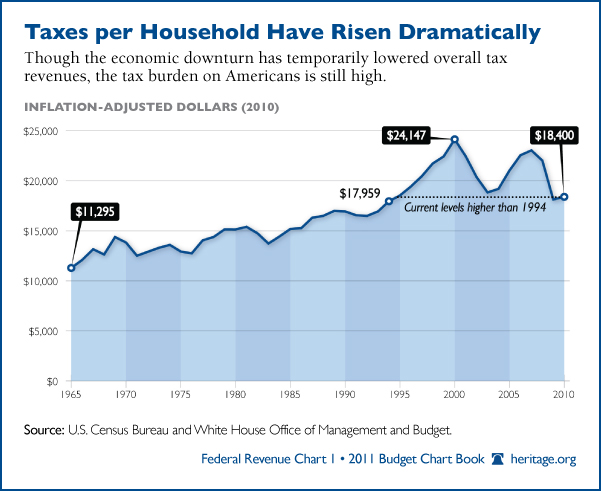
While the dollar buys less and less, the  inflation tax pushes Americans into higher tax brackets.


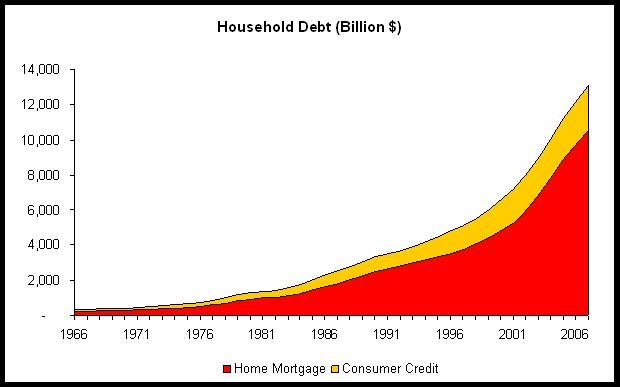
Just to maintain their standard of living with a massively devalued dollar accompanied by higher taxes, Americans resorted to debt.


A nation where the government literally robs its citizens with taxes and inflation will not be a free and prosperous nation. Deficit spending is nothing more than a whopper of a future tax.


What is so amazing about the above graph is that the federal debt soared once Nixon de-tethered the dollar from gold in 1971. From 1971 on, the US dollar has been nothing more that a paper fiat currency that facilitated insane and unsustainable debt burdens at all levels - government, business and consumer.

If Americans are to ever rise again as a free, sovereign and prosperous people, sound money must be restored.  Central banks are the mother's milk of impoverishment and tyranny.

Saturday, June 16, 2012

The Fiat Monetary Rain in Spain has Drowned the Spanish Plains


Julie Andrews sang "the rain in Spain stays mainly in the plains" in My Fair Lady but these days Spain is profoundly suffering from a different kind of rain, namely Spanish banks raining fiat money into fueling a real estate bubble. The fiat dam has busted and now Spain is downing in bad real estate loans. At first it was reported that Spanish banks need a $40 billion bailout but then the bailout figure kept rising to $125 billion. But now Zero Hedge is reporting that Spanish banks really need $500 billion euros (about $650 billion US dollars).

Spain is very similar to Ireland, a nation that also destroyed its banks with a fiat real estate bubble. The Irish banks and their investors were bailed out by the Irish people who were forced into austerity to pay the banksters who covered the gambling losses of other banksters, here.

The remnants of Spain's collapsed real estate bubble are Spanish ghost towns, here, and a whole lot of severe economic misery.  The Irish have offered the Greeks advice.
Ireland has this banking advice for Spain : imagine the worst and double it.
Like Ireland, Spain sought a bank bailout after being felled by a real-estate crash. Now, just as the Irish did, the Spanish are awaiting the results of outside stress tests gauging the size of the hole in the banking system.
“Think of the worst possible scenario on banking losses: then double it,” said Eoin Fahy, an economist at Kleinwort Benson Investors in Dublin. “Adopt the most conservative assumptions.”
Read the rest here
Bloomberg

Spain embarked on a real estate building binge that even surpassed the fiat real estate building binges in the US and Ireland. Yes, it was monumentally stupid and irresponsible but so long as central banks are creating unlimited supplies of 'out of thin air' money, the real estate developers will binge on borrowing and building, even if no demand exists for such significant increases in the housing and commercial building inventory. Of course, the laws of supply and demand do eventually kick in and bulging housing inventories are always accompanied by equally huge crashes in real estate prices, along with defaulted loans and empty buildings. When this happens, the banks are stuck with collateral of dubious value and are then forced to write the loans (bank assets) down to true market value. When the losses exceed the value of a banks' capital, the bank is bankrupt.

But the real issue is this: Who is paying for all these bank bailouts and who is being bailed out? Rich investors and bondholders are being bailed out. Bankster bailouts are nothing more than a wealth transfer from the poor and middle class to the rich.

To understand what is going on in Spain, it's pretty much a replica of what happened in Ireland and nobody tells the Irish story better than Michael Lewis in his book Boomerang. In comparing the US real estate bubble with the Irish real estate bubble, Lewis writes:  
The Irish real estate bubble was different from the American version in many ways. It wasn’t disguised, for a start. It didn’t require a lot of complicated financial engineering beyond the understanding of mere mortals. It also wasn’t as cynical. There aren’t a lot of Irish financiers, or real estate people, who have emerged with a future. In America the banks went down but the big shots in them still got rich; in Ireland the big shots went down with the banks.
But what the Irish government did next was unthinkable. It voted to guarantee the debts of Irish banks which then became the debt of the Irish people. The Irish government told the public that it must save the Irish banks. Lewis makes a most astute observation and discloses that the bailout of the Irish banks was nothing more than a bailout of bondholders:
…if the Irish wanted to save their banks, why not guarantee just the deposits? There’s a big difference between depositors and bondholders: depositors can flee. The immediate danger to the banks was that savers who had put money into them would take their money out, and the banks would be without funds. The investors who owned the roughly 80 billion euros’ worth of Irish bank bonds, on the other hand, were stuck. They couldn’t take their money out of the bank. And their 80 billion euros very nearly exactly covered the eventual losses inside the Irish banks. These private bondholders didn’t have any right to be made whole by the Irish government. The bondholders didn’t even expect to be made whole by the Irish government. Not long ago I spoke with a former senior Merrill Lynch bond trader who, on September 29, 2008, owned a pile of bonds in one of the Irish banks. He’d already tried to sell them back to the banks for 50 cents on the dollar-that is, he’d offered to take a huge loss, just to get out of them. On the morning of September 30 he awaked to find his bonds worth 100 cents on the dollars. The Irish government had guaranteed them! He couldn’t believe his luck. Across the financial markets this episode repeated itself. People who had made a private bet that had gone wrong and didn’t expect to be repaid in full were handed their money back-from the Irish taxpayer.
Michael Lewis hits on a central component of the bankster bailout schemes.  The Troika (ECB, IMF and European Commission), and the Federal Reserve argue that the failed financial institutions must be bailed out with public money because the bank deposits of ordinary are at risk.  But Lewis shatters that scam with "if the Irish wanted to save their banks, why not guarantee just the deposits?"

Why bailout investors, stockholders and bondholders?  These are folks who voluntarily took a financial business risk and the lack of proper due diligence can and do result in bad investment decisions.  Yet, the central banks will not allow these folks to suffer the losses they deserve to suffer in a sane free market.  By covering the losses of investors who make bad decisions, the central banksters have effectively churned Wall Street, investment banks and brokerage firms into full fledged casinos where high flying gambles are covered by the public's house - the poor and middle class.

In discussing the AIG bailout fiasco, astute journalist Matt Taibbi succinctly summarizes the situation.
Nor did anyone mention that when AIG finally got up from its seat at the Wall Street casino, broke and busted in the afterdawn light, it owed money all over town – and that a huge chunk of your taxpayer dollars in this particular bailout scam will be going to pay off the other high rollers at its table. Or that this was a casino unique among all casinos, one where middle-class taxpayers cover the bets of billionaires.
That’s it folks – our financial system in a nutshell. It’s all about Wall Street screwing Main Street, taxpayers and taking down the economy of the entire planet.

And that's precisely what happened in the US and Ireland, and is now happening in Spain. The Spanish people, like the American people and the Irish people, will suffer as the biggest highly rollers on the planet are literally given a license to suck on the taxpayers nipple when they lose at Wall Street's casino tables. 

Although human history is replete with many, many horrors, the poor and middle class bailing out the rich might just be one of the greatest ironies in all of human history, in addition to being its greatest heist.

Thursday, May 17, 2012

What Happened to America's Middle Class? It's All in One Graph

Feel like your dollar is buying less, even though the financial press claims that the dollar is strong? It is buying less — but so are the other fiat currencies.  Zero Hedge
Middle class wages and purchasing power have plummet since Nixon de-tethered the dollar from gold in 1971 via an Executive Order and without congressional authority. Middle class prosperity peaked in 1971 and plummeted when Nixon de-tethered the dollar from gold.

To create the illusion of prosperity, the government swapped out real prosperity for fake debt based prosperity. So long as the dollar was tethered to gold, gold was a noose around the Bankster's necks and prevented 'Banksters Gone Wild' and 'Government Gone Wild".  

Since 1971, wealth and power has been concentrated into the hands of corporatists, banksters and government as the wealth of the 99% got transferred to the 1%.

The above chart is from Zero Hedge, one of my favorite blogs.
John Maynard Keynes, Charlie Munger and Warren Buffett all said or implied that gold was a barbarous relic. But what’s the barbarous relic? The precious metal that shows prices without a veneer of manipulation, or the paper currency that smudges the true state of supply and demand through money printing, thus misleading markets and society? Charlie Munger says gold is not for civilised people, but in reality gold may be the most civilised currency of all — because it allows civilised people to purchase insurance against the risk of civilisation failing.
A central bank can claim to have demonetised gold. It can claim gold is a barbarous relic (even while keeping thousands of tonnes on its books), or just an “instrument to hedge tail risk” (although Jamie Dimon surely disagrees — J.P. Morgan prefers to “hedge tail risk” by making huge speculatory prop bets on credit derivatives).
But gold is still gold. It’s still that same shining yellow metal that investors have for thousands of years held up as a unit of account and store of value, and a medium of exchange.
Central bankers can’t just abolish history. On the other hand, history may very well abolish the central bankers and their fiat currencies.

Read the rest here
Zero Hedge
  

Popular Posts